




Growing maize in the Blackmore Vale, on challenging predominantly clay-based land, south Somerset farmer Paul Phillips achieves success by relying on robust early maturing varieties.
He also aims to be amongst the first to take advantage of plant breeding developments, by growing the latest top performers, as they become available, rather than necessarily always relying on older tried and trusted varieties.
In what has been one of the more difficult seasons in memory, his strategy has certainly paid dividends, with the newly listed LG Highlight delivering a very satisfactory 15-16 tonnes/acre, despite a potentially debilitating lack of moisture that forced a harvest weeks ahead of the norm.

Paul will be growing LG Highlight again next year.
“The maize came off in the middle of August, which was at least a month earlier than we’d expect to harvest,” recalls Mr Phillips. “The crop was losing moisture quickly, so we could possibly have gone earlier still.
“We aim for 20 tonnes/acre in a good year, so to achieve over 15 tonnes/acre, at 30% dry matter, is a good result in this very dry season.
“It’s a good variety that suits our conditions, so we’ll grow it again next year.”
New Park Farm, near Templecombe, which extends to 1,250 acres in total, usually grows 100 acres of maize, alongside grass and wholecrop cereals. The maize goes into a total mixed ration for beef finishing, but is also grown as a feed stock for AD gas production. In both cases, the aim is to grow high yields, of the best quality possible, with a harvest before conditions become unworkable in the autumn.
According to Nickerson Seed Specialist Fraser House, matching the variety to local conditions is a big part of the crop’s success.

Fraser believes that good management of the right maize varieties will achieve consistent results.
“The farm has done very well with Prospect in recent years, so we felt the new variety LG Highlight would be good progression on from that,” he says. “It has similar earliness, with an FAO of 170, and has done very well in trials. It has a slightly higher yield but with the same robustness of Prospect, demonstrating good standing ability and disease resistance qualities.
“This is not the easiest land for growing maize, being very heavy, poor draining and variable, but with the right varieties and good management it is possible to achieve consistent results, as is being shown.”
Maize is grown in rotation where possible, but may be grown continuously where circumstances dictate. Use of cover crops over the winter, typically mustard, as well as generous applications of digestate, help to maintain and improve soil health, alongside wider benefits.
“Cover crops over the winter are important, firstly as a green manure, but also to reduce the risk of soil run-off and provide habitat for the wildlife,” adds Mr Phillips. “We apply somewhere between five and seven tonnes of digestate to the acre on land destined for maize, with an application in the autumn and again in the spring. Apart from the nutritional benefits, the digestate acts as a soil conditioner, introducing valuable organic matter and improving drainage.”
All the maize land is ploughed and power harrowed ahead of drilling, which never takes place before the first of May.
“We avoid going any earlier, and always wait until soil temperatures are at an optimum level,” he adds, “as this helps us to combat what can be a significant wireworm threat. We aim to give the crop the best possible start.”
With the digestate contributing significantly towards soil nutrition, the maize requires only modest inputs of artificial fertiliser, with a standard amount of DAP applied down the spout at drilling and some nitrogen top dressed as the crop is developing. A standard pre- and post-emergence herbicide programme is applied, but no fungicides or any other inputs are needed.
Following another drought summer when growing anything has been challenging, achieving such a good return from maize provides some reassurance. With the right variety and carefully considered management, it is a crop that can deliver under the most extreme conditions.
It’s Not Too Late to Boost Home-Grown ForageFarmers facing a shortage of home-grown forage have been advised that their situation may be redeemable. Sowing a mixture of forage rye and ryegrass as soon as rain arrives offers the potential for some autumn grazing and vigorous growth over winter. This leads to the prospect of taking a cut of silage as early as March next year.
Sean Lovegreen from seed specialists, Nickerson, says this mixed crop has the potential to grow aggressively, to bulk up well over winter and provide high quality feed for livestock.
He says the mixture offers benefits over either crop individually, as – dependent on autumn rain – the forage rye has almost guaranteed vigour and will grow at low temperatures, while a mix of Westerwold, Italian and perennial ryegrass can offer a combination of quick establishment and high metabolisable energy.
“The rye and ryegrass mix gives the best of both worlds as a straight crop of rye would be difficult to manage and ryegrass alone is unlikely to bulk up enough for an early spring cut,” he says. “Depending on sowing date you should also be able to achieve at least two grazings before Christmas, or there’s a slim chance you could even get a light silage cut in late autumn.”
The mixed crop is said to be particularly suited for growers of consecutive maize, many of whom plan or have completed their earliest ever harvest as their crops have suffered with drought.

Sean advises a mixture of forage rye and ryegrass as soon as rain arrives.
“Much of the UK’s maize, particularly across the south and east, will be harvested 4-5 weeks early to prevent its further deterioration,” he says. “Rather than leaving the land bare until the next crop is drilled, there’s an opportunity to grow a catch crop of forage for grazing or conservation over the cooler months.
“After a summer like the one we’ve had we may increasingly find the cooler months are better for exploiting some cereals’ growth.
“Forage rye in particular lends itself to this practice as it is the most cold-tolerant and winter-hardy of the cereal crops. It will continue growing later in winter than other crops and will be the first to get going in the spring,” he says. “This is unlike brassicas, which are often grown to fill a winter gap but whose growth slows down after the autumn equinox.”
Remarking that short-term grasses like Italian ryegrass seed have been in short supply across Europe for the past couple of years, he says the shot of forage rye – whose seed supply should be more plentiful – helps alleviate this problem.
However, he notes that conserving forage out of season – whether in autumn or early spring – is not without its challenges.
Preserving wet, low sugar silage
Michael Carpenter from forage preservation specialists, Kelvin Cave Ltd, says cutting a crop of forage rye and ryegrass in either autumn or early spring requires particular care as both dry matter (DM) and sugars are likely to be low.
“With modern silage preservatives there is no reason why this crop can’t be safely conserved, as long as every step is carried out correctly and precautions are taken against soil contamination, which is more likely in off-season conditions,” he says.
“The objective with low sugar, low DM crops is to achieve a rapid fermentation and stabilise the forage by developing a high concentration of lactic acid.
“However, if spoilage bacteria are not wiped out, they can dominate the fermentation and deplete the crop’s sugar, creating undesirable compounds such as butyric acid and ammonia. This will make the silage unstable, unpalatable and cause dry matter loss.
“Unfortunately, there’s a growing body of evidence indicating that bacterial inoculants cannot achieve a desirable, lactic fermentation in challenging conditions and for this reason, we’d always recommend a preservative rather than an inoculant for such situations.
“Of those we supply, I’d focus on MultiMax, as it’s been developed specifically to wipe out spoilage bacteria, especially those which develop when dry matter is low.
“It’s the only silage additive we know of which has been tested with heavy levels of soil and clostridial contamination and even in this situation, it achieves high levels of lactic acid, a rapid drop in pH and a stable fermentation.
“With its use, we have seen silage made and successfully preserved as late as the end of October or even into November, in most areas of the UK.
“This has certainly given us absolute confidence that low sugar, low dry matter autumn- or early spring-cut silage can be well-conserved, as long as the right preservative is used and good practice is followed,” he says.
Establishing the crop
Similar attention to detail will need to be paid to the crop’s establishment and growth and Sean says this should include recalculating seed rates (he recommends 50% of the full rate for each crop); drilling the rye; separately broadcasting the ryegrass; and choosing varieties carefully to maximise winter growth (he recommends Humbolt forage rye and ‘Catch Crop Circle’ for the ryegrass mix).
“Last year we put this mix into thousands of acres – much across Cheshire and Shropshire – and it worked tremendously well,” he says. “These farms went on to take heavy crops of silage, some as early as March and some in April.
“This year these farmers are asking for the same again, which tells me all I need to know,” he says. “And after the summer we’ve had and the widespread forage shortage, I believe this catch crop will be even more useful in 2026-2027 than it was last year.”
How to Maximise Silage Quality and Feed ValueFollowing another hot and dry growing season across the UK, many maize crops are advancing towards maturity more quickly than expected. While crop condition is generally stronger than last season, growers need to harbour the lessons learnt from previous years when extreme weather accelerated crop development.
For farmers growing maize for silage, selecting the correct harvest timing remains one of the most important factors in achieving high-quality forage and maximising feed value.
The target dry matter for most maize grown for silage, is around 30-35%. Harvesting within this window helps maximise starch content, improve digestibility and support effective clamp fermentation resulting in more consistent forage quality throughout the feeding season.
Assess Maize Maturity Carefully
Dry conditions can cause maize plants to senesce earlier than normal, making crops appear ready, well before the cob has fully matured.
Rather than relying solely on the appearance of the crop, growers should regularly assess cob maturity and monitor whole plant dry matter. The aim is to harvest a crop that still retains green leaf area while carrying mature grain.
As the grain matures, starch accumulates within the kernels, significantly increasing the crop’s energy value. Allowing the crop to reach the correct stage of maturity, ensures this valuable starch is captured without compromising clamp consolidation or fermentation.
Harvesting too early can result in lower starch levels and reduced feed value. However, delaying harvest beyond the optimum stage can reduce digestibility and make crops more difficult to chop, compact and preserve effectively in the clamp.
Why Field-by-Field Monitoring Matters
No two maize fields mature at the same rate.
Factors including, soil type, drilling date, rainfall, and variety maturity, all influence harvest timing, meaning regular field walking is essential.
Sampling representative plants and measuring dry matter, provides a far more reliable guide than judging crops from the field edge.
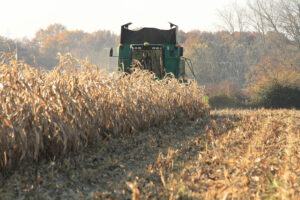
Extreme heat has led to maize crops maturing quicker than expected this season.
When is Maize Ready for Harvest?
Key indicators that forage maize is approaching the optimum harvest stage include:
– Whole-crop dry matter is 30–35%
– The milk line is halfway to two-thirds down the kernel when you split a cob
– The very lower leaves are browning, but the upper plant is still green
– The cobs are full with firm, doughy kernels
Monitoring these indicators together will help ensure crops are harvested at the point where yield and forage quality are best balanced.
Maize Variety Selection Remains Critical
This season has once again highlighted the importance of selecting maize varieties with reliable maturity and strong agronomic performance.
Choosing the right maize variety for local growing conditions provides greater flexibility at harvest and helps ensure crops consistently achieve target dry matter before autumn weather becomes a limiting factor.
Earlier-maturing varieties can help reduce harvest risk, while varieties with proven forage quality characteristics can support improved livestock performance and feed efficiency.
Planning for Next Season
Successful maize production starts long before harvest. Variety choice plays a major role in determining harvest flexibility, forage quality and overall crop performance.
At Nickerson, our forage maize portfolio has been selected to deliver reliable maturity, strong silage quality and dependable on-farm performance across a wide range of growing conditions. Combined with careful monitoring of crop maturity and timely harvesting, selecting the right variety helps maximise forage quality and feed value year after year.
Oilseed Rape Establishment: How to Give OSR the Best Start This AutumnWith harvest now largely complete across southern England following an unprecedented early harvest, attention is quickly turning to the establishment of next year’s crop. For many growers, oilseed rape (OSR) will be among the first crops drilled this autumn.
As more farmers return to growing oilseed rape after several years away, successful establishment remains one of the biggest challenges. Pressure from cabbage stem flea beetle (CSFB), combined with increasingly unpredictable autumn weather, means every decision made at drilling can have a significant impact on crop performance and final yield.
Successful Oilseed Rape Establishment Starts with Soil Conditions
The key to successful oilseed rape establishment, is creating the right conditions for rapid emergence and strong early growth.
Moisture conservation is essential. Many growers are opting for minimal soil disturbance where possible, preserving valuable soil moisture while encouraging quick and even germination.
While there is always pressure to drill oilseed rape early, successful establishment should be driven by soil conditions rather than calendar dates. Waiting for sufficient moisture can often produce a more even, vigorous crop, than drilling into dry seedbeds.
Nutrition Supports Early OSR Growth
Attention to crop nutrition can also play an important role during establishment.
Ensuring adequate phosphate availability and considering early nitrogen applications where appropriate can help maximise rooting and canopy development during establishment.
A well-established oilseed rape crop enters winter in a stronger position, helping maximise spring growth potential and ultimately supporting yield.
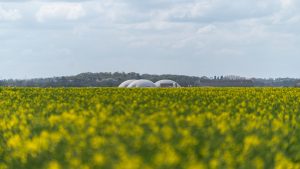
Oilseed rape will be a popular crop this autumn.
Why Hybrid Oilseed Rape Varieties Deliver Stronger Establishment
Variety choice is one of the most important decisions growers make before drilling.
Hybrid oilseed rape varieties continue to demonstrate their value, particularly in the challenging conditions often experienced across southern UK.
Their inherent vigour allows seedlings to emerge rapidly, develop larger root systems, and build biomass quickly during the crucial early weeks after drilling.
This early vigour can help crops:
– Grow away from cabbage stem flea beetle grazing
– Produce stronger root systems before winter
– Improve competitiveness against weeds
– Maintain more consistent plant populations where establishment conditions are less than ideal
For many growers, these characteristics make hybrid varieties a key part of a successful oilseed rape strategy.
The Importance of Pod Shatter Resistance
The benefits of hybrid oilseed rape extend beyond establishment.
All Nickerson hybrid oilseed rape varieties include the pod shatter resistance trait, helping reduce losses where weather conditions delay harvest. This provides greater security and flexibility at a critical stage of the season and remains one of the most valuable characteristics growers should consider when selecting an oilseed rape variety.
Building a Resilient Oilseed Rape Crop
Every season presents different challenges, but establishing a vigorous crop remains the best defence against pests, weather and variable autumn conditions.
Choosing a high-performing hybrid oilseed rape variety, combined with careful attention to seedbed quality and drilling conditions, gives growers the greatest opportunity to maximise yield potential from the very start.
At Nickerson, our hybrid oilseed rape portfolio has been selected to deliver the vigour, resilience and performance needed for UK farming.
By giving crops the strongest possible start this autumn, growers can build the foundations for a successful harvest next summer.
Take a look at our Oilseed Rape varieties here.
Scottish EFA ChangesThis year, the Scottish government has made changes to the Ecological Focus Area (EFA), which is a requirement under the enhanced greening section of the Basic Payment Scheme (BPS).
The changes include:
– The removal of the 75% exemption for temporary grassland
– The removal of the 75% exemption for grassland on claimed land
However, this does not apply if the farm is exempt from the enhanced greening requirements, due to it being certified organic or having less than 15ha of non-organic arable land.

James Frazer, Nickerson Seed Specialist, is happy to help you meet the new EFA requirements
The number of options has increased to 11 – they can be used on their own or in combination, to meet the EFA requirement:
All the options are listed below:
- – Fallow land
– Margins
– Catch crops
– Green cover
– Nitrogen-fixing crops
– Hedges
– Agroforestry
– Low input grassland
– Herb and legume rich pastures
– Alternative EFA agro forestry option
– Unharvested crop
At Nickerson, we can supply bespoke mixtures that adhere to many of the above options.
Please contact James Frazer or Douglas Bonn for further information.
Opportunities for Maize in 2026The 2025 season brought a very dry spring and a hot, dry summer, causing drought and major maize yield losses (20–50%+) across much of the UK.
Livestock farms dependent on maize and already short of grass silage will face forage shortages by spring 2026, driving higher demand for maize in 2026/27.
In contrast, northern and marginal regions such as Yorkshire, Lancashire, Cumbria, Tyne–Tees, and parts of southwest Scotland saw excellent maize performance, especially from very early Limagrain varieties. Strong results are expected to encourage continued maize growing in these areas, where early, high-performing varieties are expanding opportunities and often provide better feed value than wholecrop wheat.
Mainstream varieties for higher yields
 For growers in more favourable regions looking to maximise yield and forage quality, two standout varieties from Limagrain are Promise and LG Highlight.
LG Highlight – Expected to join the 2027 list, LG Highlight offers:
Early maturity (similar to Prospect)
Very high starch and cell wall digestibility
A significant improvement in dry matter yield
8–10 t/ha dry grain yield
8–10% lower harvest moisture than many current market varieties
Attractive orange/yellow grain, ideal for animal feed markets
Proven drought tolerance, carrying the Hydraneo badge, indicating enhanced stay-green characteristics and performance under moisture stress. These varieties present excellent opportunities for farmers aiming to replenish forage reserves and improve ration quality in 2026.
Growing maize as a cash crop
In eastern arable regions, maize is increasingly being grown as a profitable cash crop, either for forage, for sale to livestock units, or for anaerobic digestion (AD). Droughted AD units from 2025 are expected to have depleted buffer stocks, and new green gas biomethane units supported by government schemes are creating further demand. For arable units short of land or seeking rotational benefits, partnerships with livestock producers also present opportunities.
Grain maize opportunities
 A growing area of interest is grain maize, supported by new breeding progress that enables earlier dry-down and reduced drying costs. One notable development is which has shown outstanding performance across three years of grain maize trials: Lower grain moisture directly reduces energy and drying costs, improving profitability. Grain maize also offers rotational benefits, including:
Opportunities for blackgrass and problem-weed control
Timely establishment of winter wheat following a September harvest
Valuable residue incorporation, contributing to soil organic matter
Summary
The 2026 season presents strong opportunities for both livestock and arable farmers:
Growers in mainstream areas can maximise output with high-yield, high-quality varieties such as LG Highlight and Promise.
Arable farmers have expanding opportunities to grow maize as a cash crop for forage, AD, or grain, with varieties like LG31.160 offering excellent grain potential and lower drying costs.
With high demand for homegrown forage and expanding AD capacity, maize cropping in 2026 is expected to increase significantly, supported by a strong pipeline of innovative, high-performance Limagrain varieties.
You can view all our maize varieties and the rest of our product portfolio in our brand new Nickerson Seed Book – click to download!

Farming on the northern margins of the North Wessex Downs, Hamish McIntosh has always tried to maximise the contribution maize makes to his milking ration.
Soil types vary across the farm, some being challengingly heavy, so success has come with tailoring variety selection according to field conditions, as well as staying abreast of the latest developments in maize breeding, in order to continually improve his output.
In 2025 – a year that has proved challenging for many maize growers – the decision to grow one of the very latest early maturing varieties to come onto the BSPB/NIAB Descriptive List has certainly paid dividends.
Based at Hardwell Farm, near Knighton in Oxfordshire, Hamish runs a 400-cow milking herd alongside 200 acres of arable cropping and a similar acreage of grassland. The herd is conventionally managed, calving all year round, housed in the winter months, and outside during the grazing season. In an area where TB is a continual threat, as many heifers as possible are retained on the farm, in a quest to maintain numbers.

Hamish McIntosh and his dairy herd at Hardwell Farm.
The aim is to minimise parlour-fed concentrates and derive as much as possible from the mixed ration, to support average yields of 9,000 litres/cow. Maize silage certainly plays a key part in this strategy, comprising around half of the forage component.
Around 200 acres of maize are grown on the farm, fitting into a rotation with winter wheat and grass, and this year a quarter of the acreage was given over to newly listed LG Highlight.
“It’s a variety that has looked really promising in trials and fits perfectly with Hamish’s requirement for high dry matter yields, quality in the clamp, and a sufficiently early harvest to allow a following crop of winter wheat to be established,” says Nickerson Seed Specialist Fraser House.
“LG Highlight will be one of the top new varieties for dry matter yield on the 2027 maize Descriptive Lists, and with an FAO rating of 170 it certainly has the earliness. It also has high starch yields and strong agronomic characteristics. Where farmers are looking for the combination of yield, quality and earliness, this is a variety that really hits the sweet spot.”
It was grown alongside Prospect, also FAO 170, and the slightly later maturing Conclusion, both from the Limagrain Field Seeds UK breeding programme and having a proven track record on the farm.
“Some of the land at Hardwell Farm is not the best for maize, so the policy is to grow what we think will perform in the particular circumstances,” continues Fraser. “Robust varieties with early vigour, good standing power and the necessary disease tolerance are what’s required, plus early maturity and high dry matter yields. Increasingly, we are seeing varieties that will deliver this full package, with the additional benefits of high cell wall digestibility that ensure farmers like Hamish can rely on having a full clamp of energy dense forage.”

Hamish was delighted with the yield and quality of the LG Highlight silage.
With so much rain falling throughout the winter and spring, Hamish had to work hard to create a suitable seedbed for his 2025 maize crop. All the maize ground is ploughed, with slurry and manure applied before and sometimes afterwards.
“The heavy rain seems to be becoming more common and it does not help our heavier ground,” he says. “We’re increasingly needing to sub-soil, and on our heavier ground we’ll normally need to power harrow before drilling. We have our own maize drill, so we can be timely, going when the conditions are right.”
Optimum drilling date is 1st May at Hardwell Farm, and maize is drilled with DAP fertiliser down the spout and 125kg N/ha onto the seedbed. Pre- and post-emergence herbicides maintain good weed control, and – with that including a reduction in blackgrass on the farm – offers a wider benefit of having maize in the rotation.
“I’m aware of the specialist maize fertilisers and developments like foliar sprays, and we’ll keep a close eye on any ways to improve, but – at the moment – our system seems to be working. Growing the right varieties is a good part of our success, and being aware of the progress in maize breeding.”
The maize at Hardwell Farm was harvested on 20th September and, whilst it was not the best year for maize generally, Hamish was happy to see the LG Highlight standing out.
“It was our largest crop with big mature cobs, so it delivered what we wanted,” he says.
“We probably cut a little earlier than some, because I like to see some green leaf in the clamp. Overall, I’m very happy with the performance of the maize, and it was off in good time to establish the winter wheat.”
The maize will go into the ration at what Hamish considers the optimum level of around 50% of the forage, alongside grass silage, biscuit meal, a rape-soya meal and urea.
With maize breeding progress providing earlier varieties that avoid any compromise on dry matter yield or forage quality, it is a crop that will continue to be of great value at Hardwell Farm, for both milk production and crop rotation
Maize Varieties to Fit Your FarmMaize is one of my favourite crops to talk about. There is such a substantial difference between the vast array of maize varieties currently on the market – perhaps more so than any other crop species.
When I am speaking to my customers regarding variety choice for the upcoming season, I consider many factors before making a variety recommendation. These factors can include soil type, field aspect, end-use, drilling period and intended harvest date, amongst others. All these factors must be considered in order to choose the correct varieties for your farm.
Within my area, there has been a notable uptick in attention to variety choice, due to the extremely varied and challenging seasons we have had in recent years. The vast differences between the 2024 season, which saw crops mature later than normal, compared to 2025, which has been incredibly early, has thrown confusion into variety choice for this coming year.
Variety choice plays a key role in overcoming abnormal climatic conditions, so it is reassuring to know that there is a spectrum of different varieties out there, and there will certainly be one to fit on your farm.
We have also had more disease pressure in 2025, along with increasingly common pests, such as the European corn borer, which is making its way further north every year. I always try to encourage my customers to think about the above factors when looking at variety choice, to help mitigate risks in the coming growing season.
However, even with all these challenges we face, we can still produce an excellent quality crop. Whether it is for forage, crimping or anaerobic digestion, we have the varieties and experience to best guide our growers to the correct variety choice.
Download the brand new 2026 Nickerson Seed Book here featuring all our maize varieties!

As someone who works closely with UK growers every day, I’ve seen how pulses (peas and beans) are a key part of sustainable farming. They’re not just a great source of protein for both human and animal diets, but also improve soil health and reduce input costs.
We have been involved in many studies using home grown proteins in animal diets, to replace imported soya, thereby saving costs and reducing environmental impact.
At Nickerson, we work alongside our colleagues in Limagrain, who have a diverse Pulse Portfolio – not just in terms of yield, but also in traits like disease resistance, early maturity, strong standing ability and market access. These are the things that really matter when it comes to getting the most out of your crop.
Pulses fix nitrogen naturally, helping to cut down the need for artificial fertilisers, which we all know are getting more expensive and difficult to source. They also help with better weed control and benefit the following crops in the rotation, like cereals and oilseeds.
It’s a win-win for both productivity and sustainability.
One variety I’m particularly excited about is LG Eagle – a spring bean that’s delivering high yields and excellent disease resistance. It matures early and stands well, which means fewer harvest losses and more flexibility. It’s suitable for a range of markets; from human consumption to fish feed and animal protein.

LG Spring Beans have strong disease resistance, early maturity, and they deliver high yields.
On the pea side, LG Corvet is a standout yellow combining pea. It’s got top-tier downy mildew resistance and a high protein content. Its short stature and strong standing ability make for easy combining.
As a Nickerson Seed Specialist, I’m here to help you choose the right variety for your location and cropping system.
Whether you’re looking to improve soil health, reduce inputs, or tap into new market opportunities, pulses are a great choice, and we offer varieties to fit all these situations.
If you’d like to chat about how pulses could fit into your rotation, or want to learn more about the latest varieties, please give your local Nickerson Seed Specialist a call.
Maize in Northern Margins a Potential Game-ChangerMaize: The New Game-Changer for Doddington Dairy’s Forage and Sustainability Strategy
Farming in the rain shadow of the Cheviot Hills and with predominantly light sandy soils, Neill and Jackie Maxwell and their team at Doddington Dairy find growing grass to be a challenge.
Fodder beet bolsters the ration for the 400 strong crossbred milking herd, but what they have really wanted to include for quite a number of years is maize.

Neill and Jackie Maxwell make French-style raw milk cheese and ice cream at Doddington Dairy and won Best Food Producers in the BBC Food and Farming Awards in 2015.
Based near Wooler, in Northumberland, on the same latitude as Moscow and the south of Sweden, that’s not been an option, at least not until the 2025 season.
“Maize is a potential game-changer for us, particularly on a farm where grass growth is often difficult,” explains Neill. “Our aim is to produce as much as possible from homegrown crops, so to have our own maize in the ration will be a big step forward.
“We did try growing it around 15 years ago, but without any success. Growing maize under plastic has seemed like our only option, but we would not want the risk of microplastics in our soils and we have a strong sustainability agenda across the business.
”We decided to try growing maize unprotected again after attending an alternative forages workshop where we heard about the progress in maize breeding.
“From our experience this summer, it’s quite possible that maize will perform best for us in the years that are the most difficult to grow grass. Farming is about mitigating risk, so having another crop in the mix that can add great value to the ration whilst bolstering our overall forage output will be a great result.”
The event Neill refers to was organised by Nickerson and featured a presentation from Limagrain Field Seeds UK on the increased potential of earlier maturing varieties. Seed specialist David Watson, who hosted the meeting, helped the Doddington Dairy team in the choice of variety and the management of the crop.
“I advised growing a variety called Prospect, because I knew it had a great track record and felt it would best suit the site,” he explains. “With an FAO of 170, it’s an early variety, though not the earliest produced from the Limagrain breeding programme, but the farm has light soils and the fields in question have a southerly aspect, so I felt sure it could do well. The early vigour certainly helped the crop and with high starch and very good cell wall digestibility it should deliver what the farm wants in the ration.”
The farm grew a cautious 21 acres in 2025, on land close to the farmstead. After plentiful applications of muck and slurry, the sandy ground was ploughed and cultivated before being drilled and then rolled. A compound fertiliser was included down the spout and nitrogen was applied onto the seedbed at 125kg N/ha. A standard programme of pre- and post-emergence herbicides, as advised by the farm’s agronomist, were the only other inputs.
“We drilled on 1st May in dry conditions, but there was moisture in the seedbed,” recalls Neill. “The crop was out of the ground quickly, and then it rained in June. Thereafter conditions remained largely dry.
“It was not the conditions for growing grass, but the maize continued to thrive. Our biggest issue turned out to be the crows feasting on the maize seedlings.”
The crop was fully mature and harvested on 30th September, yielding 18.5 tonnes/acre at 33% dry matter, but the on-board yield monitor on the forager revealed some areas of the field yielding 22 to 23 tonnes/acre.
“The variation in yields was almost certainly due to the crow damage,” adds Neill. “Despite that, we’re delighted with how the crop has performed, and particularly with the earliness as it has allowed us plenty of time to drill a following crop of wheat. We don’t ever leave bare ground over winter, so such early maturity is a big factor in the crop being viable for us.”
The farm, run by Neill and Jackie Maxwell, their herd manager James Kelly and his dedicated team, extends to 1,200 tenanted acres. Wheat, barley and fodder beet are grown across about 300 acres, with all crops fed at home.
Calving all year round, the milking herd at Doddington Dairy averages around 8,500 litres/cow. Milk solids are particularly important, with around 20% of production going into the farm’s specialist French-style raw milk cheeses and ice cream. The majority of the milk is sold on a contract to Arla.

Maize has been a game-changer for Jackie and Neill.
“We’re striving all the time to lower our carbon footprint and maximise sustainability,” continues Neill. “So, despite the challenges, we try to make as much as we can from grazing, and will aim to have some cows at grass from the beginning of April through until Christmas if we possibly can, as well as making up to four cuts of grass silage.
From this winter, maize will be included in the milking ration for the first time, replacing a proportion of the grass silage and potentially some of the bought-in straights. The aim is to take the pressure off grass production and also boost the performance of the cows at a critical time.
“We’ll include maize in the ration for the early lactation cows, to maximise intakes and yields,” says Neill. “We’ll go into it steadily at first, but do see great potential going forward.”
The milking ration is fed twice daily, after milking, not least to avoid the risk of cows gorging on fodder beet, which – once available – is fed at a rate of 15kg/cow/day. Also included is a set level of 12kg/cow of concentrate feed, fed as straights, as well as ground maize, soya hulls, barley and wholecrop wheat. There is no bought in compound feed or soya.
“Our herd manager James is first class and I know he and his team are really looking forward to feeding maize,” concludes Neill. “It will allow us to reduce our reliance on grass, making more milk at a similar cost, and that’s all building sustainability into the business and reducing our exposure to risk. If all goes as we hope, we’ll look to increase the maize acreage next year by two or three times.”
Explore the Brand New Nickerson Seed Book
Welcome to the first EVER Nickerson Seed Book!

Click to download your copy of the new guide!
For the very first time, you’ll find our entire range brought together in one place – Cereals, Pulses, Oilseed Rape, Maize, Circle Leys grass mixtures, plus our specialist Forage and Environmental seeds. A full catalogue designed to give you clarity, choice, and confidence when it comes to your seed decisions.
Nickerson are the Original Seed Specialists. For over 75 years, we’ve supplied seed and advice to British farmers – trusted by generations because we understand the job, the challenges, and what it takes to grow a successful crop. Our history gives us provenance. Our experience gives you peace of mind. When you choose Nickerson, you are not just buying seed – you are investing in a partnership.
That partnership is delivered through our nationwide team of Nickerson Seed Specialists. These are not simply salespeople – they are experts, practical thinkers, and trusted advisors. They know farming, they know seed, and they take the time to understand your business. Their role is simple: to help you make the best choice for every field, every season.
We are proud of our heritage, but we never stand still.
Farming is changing – new pressures, new opportunities, new demands on every hectare. Our job is to make sure you have the right seed, the right advice, and the right support to meet those challenges head-on.
This brochure is designed to help you do exactly that. It brings our portfolio together in one clear guide – from high-yielding cereals and resilient oilseed rape to productive maize, proven grass mixtures, and targeted environmental options. Every product has been selected, tested, and supported by Nickerson, so you can choose with confidence.
Quality seed. Trusted advice. Unmatched service. That has been our promise for over 75 years – and it remains our promise today.
Take a look at our 2026 Seed Book today.
First full season with Nickerson wrapped upAs the 2025 autumn drilling season draws to a close, I have now completed my first full season with Nickerson.

James Frazer
There will be some more wheat to be drilled after potatoes but on the whole, most farms have completed their drilling campaign for crop 2026. The ’25 growing season has been challenging due to the extreme weather conditions that growers have faced. The dry spring allowed spring crops to be established early in good conditions, but the crops were soon needing moisture and yields have suffered as a result.
The winter crops, by contrast, were established in good conditions in autumn ’24 and although there has been some loss of yield potential due to moisture stress, the yields have been very good for winter wheat, barley and oilseed rape.
The oilseed rape especially, has been the standout crop on most farms that include it in their rotation, with many yields reported around or above 5t/ha!
The role with Nickerson has helped me increase my knowledge of varieties of all crops, which has allowed me to better advise my customers.

LG Typhoon
For winter barley growers, both LG Caravelle and LG Capitol are equally good options. Oilseed rape growers have a plentiful number of varieties to choose from, with LG Adapt giving another step up in yield, alongside the established LG Armada and LG Ambassador. LG Anarion is still a robust variety for farms with shorter brassica rotations.

LG Rebellion
Wheat growers have a choice of variety for each sowing position. LG Typhoon is suitable for the early sowing slot from the start of September, and LG Beowulf is a good option for the mid and late drilling slot. For late drilling, which is predominantly after potatoes or vegetables, LG Redwald offers a very high yield potential.
Although LG Skyscraper has been on the market for several years, it has shown its resilience, and it is still a good option for the mid to late slot. This year, many farmers have commented that it has yielded around 12.5 t/ha in many different parts of the country.
Another variety that gives growers a different option is LG Rebellion. It has an early maturity of -1, without losing a lot of yield. In fact, it was one of our top yielding varieties in the LG Perth trial site.
With this season over, I’m already looking forward to the next one, and I’m eager to see how new LG varieties are performing on farm.