





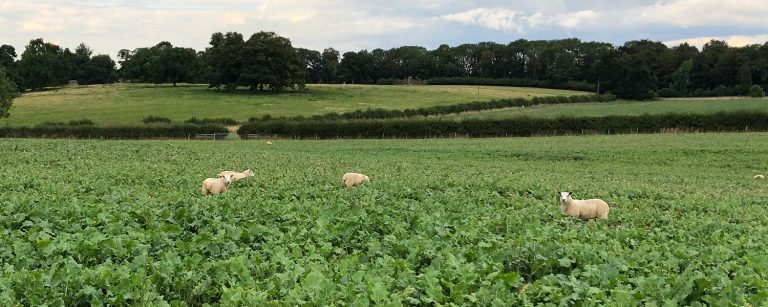
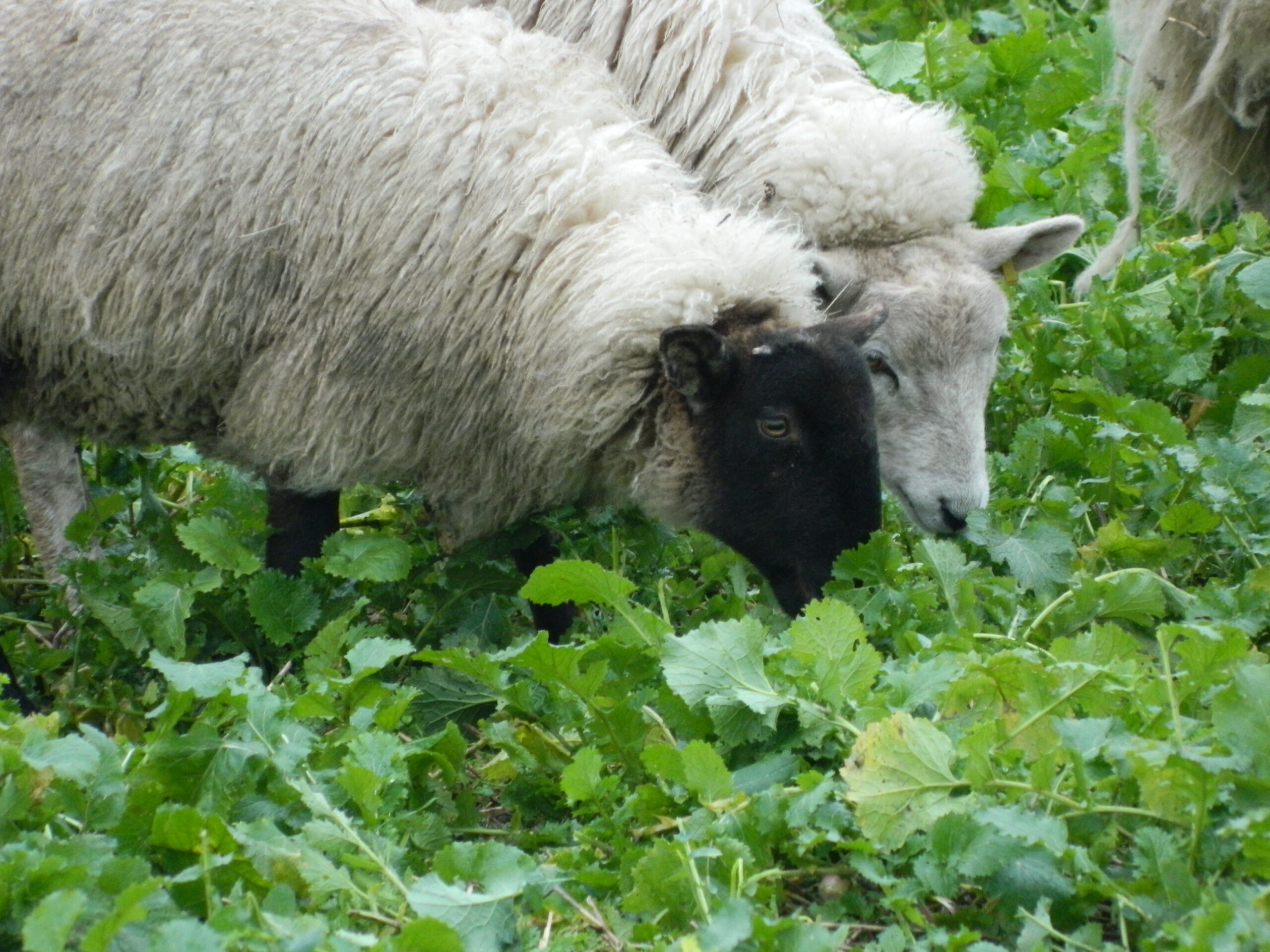
As forage becomes scarcer, due to changing weather every year, stubble turnips may be a good and quick growing alternative, to see livestock through the autumn and winter months.
Not only this, but they also offer benefits when it comes to soil fertility, soil structure and blackgrass control, and they can work as a catch crop if established early enough in the season, prior to drilling an autumn crop.
Depending on when the turnips are required for grazing, establishment can be anywhere from April (for summer feeding) to early August, if they are required for overwinter feeding. Any later than this, then there is a risk that the turnips will produce more leaf and less bulb.
They can be established either by drilling or broadcast, but in both cases, a good seed bed is required and ideally establish on free draining soils with good drainage, as grazing livestock could cause a mess/ damage when wet.
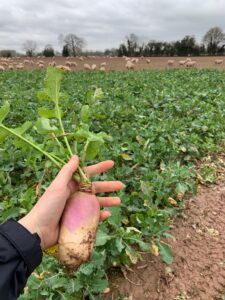
If drilling, establish at 4kg/ha and if broadcasting, establish at 8kg/ha. Sowing-grazing is 12-14 weeks, and livestock can either be put to grazing immediately after establishment, or it can be left longer to allow bulbs to swell.
If grazing lambs, they should be introduced gradually and other sources of fodder, such as baled silage, should be provided, in order to encourage them to eat the bulbs, otherwise they will only be interested in the leaf. For all types of livestock, fencing is required and should be moved accordingly to manage feedstocks.
As stubble turnips are a brassica, it is important to be aware of potential diseases such as club root and cabbage stem flea beetle (CSFB). To minimise these, ensure good crop rotation is in place and monitor growth for CSFB damage, as this can lead to significant yield reduction and/or crop failure, if not treated accordingly. Furthermore, if oilseed rape is grown in the rotation, ensure it is not in close proximity to it (to protect both crops), and control volunteers prior to establishment.
Variety wise, we have 3 options, depending on requirements.
Firstly, Samson is a top selling variety due to its palatability and large tankard bulbs, which produce ample forage for both sheep and cattle.
Secondly, Hector’s bulbs sit proudly above the ground, meaning less wastage, however, the biggest disadvantage to this is that they are less winter hardy, so best utilised as summer/ autumn grazing.
Lastly, Rondo would be the choice for post-Christmas grazing, due to its good root anchorage, resulting in better protection from frost.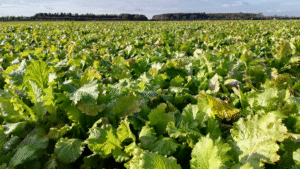
We also have bulbless varieties such as Skyfall, and rape hybrids such as Tyfon, which both produce leafier material, better suited for later establishment. These can also be established alongside bulb varieties, to provide extended resources.
For more information, please don’t hesitate to contact your local Nickerson Seed Specialist.
About The Author

Grant Connor
Seed Specialist
What To Read Next