




Maize cultivation – a face off
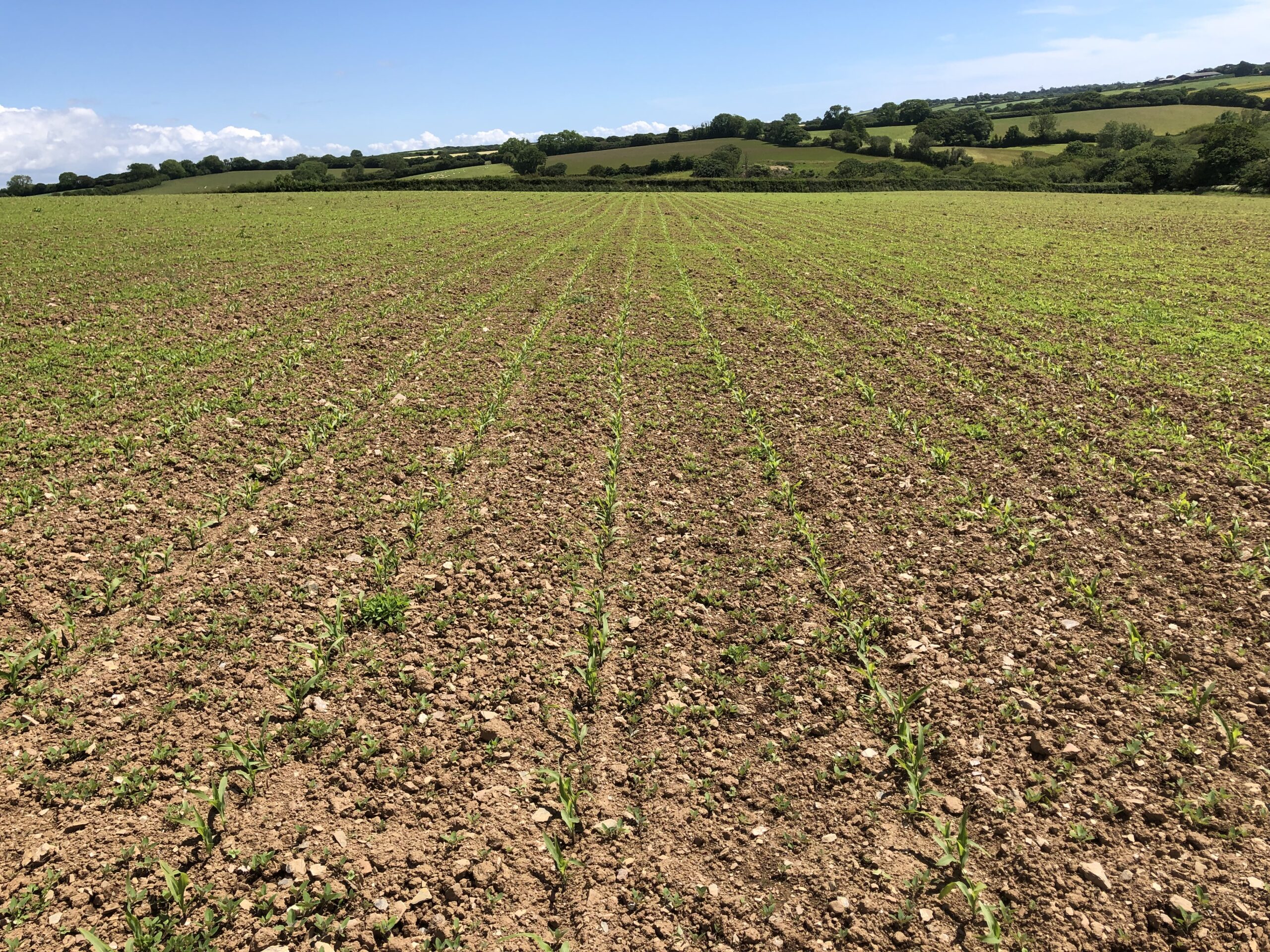
After a very late start to the maize season, with an extended period of wet weather in the South West, it was going to be interesting to see if the prophecy of extended maturity times on reduced cultivation maize was going to be correct or not.
Two adjacent fields had been selected and drilled with LG Promise on the same day, one with conventional cultivation and the second using Malcolm Barratt’s Strip Till drill. The drill rate was the same at 45k
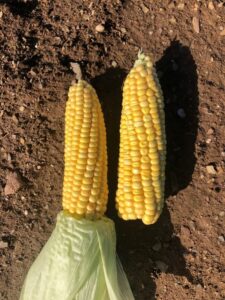
Conventional drilled cob on the left and strip till on the right – 3rd October.
seeds an acre and both had a slight difference in row widths. The conventional went in with 760mm widths and the strip till at 640mm.
With this in mind, I set out with Jerry Alford, from the Soil Association to take some pre harvest samples from across both fields in mid-October.
The difference in row spacing showed up in the fields with the strip till field having much thicker stems than the conventional. This would be due to the wider seed spacing in row which affected the conventional field, as the storms from the previous two weeks had knocked some patches over.
At the time of sampling, it was surprising to find that the strip till maize was very slightly ahead in maturity than the conventional field which we weren’t expecting. The yields did show differences though with a reduction in yield of 7% in cob weight and about 12% in total plant wet weight, with the better yield going to the conventional field. We are waiting to see the results of starch content to come back. I did also see a reduction in secondary cobs on the strip till compared to the conventional making the strip till cobs better quality.
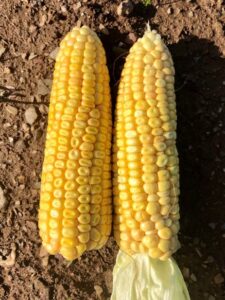
Strip till cob on the left, conventional on the right – 23rd October
With these results in mind and the way weather is playing a major role in when we can drill maize, all is not lost if a full cultivation is not going to be possible. A reduced cultivation will still return a viable crop, even though the overall yield may be slightly reduced. By selecting a high yielding variety to start with such as Promise, it is possible to mitigate some yield reductions though.
Many thanks to Innovative Farmers and Field Lab for their help with this trial.
About The Author

Rob Ayres
Seed Specialist