


Welcome to the first EVER Nickerson Seed Book!
For the very first time, you’ll find our entire range brought together in one place – Cereals, Pulses, Oilseed Rape, Maize, Circle Leys grass mixtures, plus our specialist Forage and Environmental seeds. A full catalogue designed to give you clarity, choice, and confidence when it comes to your seed decisions.
Nickerson are the Original Seed Specialists. For over 75 years, we’ve supplied seed and advice to British farmers – trusted by generations because we understand the job, the challenges, and what it takes to grow a successful crop. Our history gives us provenance. Our experience gives you peace of mind. When you choose Nickerson, you are not just buying seed – you are investing in a partnership.
That partnership is delivered through our nationwide team of Nickerson Seed Specialists. These are not simply salespeople – they are experts, practical thinkers, and trusted advisors. They know farming, they know seed, and they take the time to understand your business. Their role is simple: to help you make the best choice for every field, every season.
We are proud of our heritage, but we never stand still.
Farming is changing – new pressures, new opportunities, new demands on every hectare. Our job is to make sure you have the right seed, the right advice, and the right support to meet those challenges head-on.
This brochure is designed to help you do exactly that. It brings our portfolio together in one clear guide – from high-yielding cereals and resilient oilseed rape to productive maize, proven grass mixtures, and targeted environmental options. Every product has been selected, tested, and supported by Nickerson, so you can choose with confidence.
Quality seed. Trusted advice. Unmatched service. That has been our promise for over 75 years – and it remains our promise today.
Take a look at our 2026 Seed Book today.
How to judge the maturity of maize for harvestHarvesting maize at the correct maturity is crucial for ensuring optimal yield, quality, and nutritional value.
Harvesting too early can lead to underdeveloped grain, lower starch and excess effluent, whilst waiting too long may result in losses of feed value, digestibility and palatability. With the very challenging conditions this year, assessing crop maturity is crucial for optimising quality. Below are some important points to consider:
Understand the Importance of Maturity
Maize maturity directly impacts its starch content, moisture levels, and overall quality. For silage, harvesting at the right stage ensures the best fermentation and feed value. For grain maize, the crop needs to reach a moisture content of 25-35% (DM of 65-75%), before being combined. The crop must be left longer in the field to dry down, to ensure maximum yield and storability.
Key Indicators of Maize Maturity
- – Kernel Milk Line
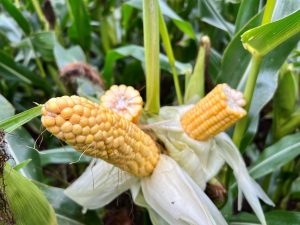
The milk line is a visual indicator of kernel maturity. It appears as a dividing line between the starchy and milky parts of the kernel. As the maize matures, this line moves from the top of the kernel toward the base. Harvest for silage is ideal when the milk line is about two-thirds to three-quarters down the kernel for silage. For grain maize, wait until the milk line disappears entirely, indicating full maturity.

- – Black Layer Formation
The black layer is a small, dark spot that forms at the base of the kernel when it reaches physiological maturity. This is a sign that the maize has stopped accumulating dry matter. For grain maize, this is the ideal time to harvest, as the moisture content will have dropped to around 25-35%.
- – Cob and Husk Appearance
Cob Colour: Mature cobs often turn from green to a reddish or brownish hue.
Husk Texture: The husks will feel dry and papery when the maize is ready for harvest.
Kernel Hardness: Mature kernels are firm and dented, with no milky liquid when pressed.
Field Observations
Uniformity: Check multiple plants across the field to ensure uniform maturity. Variability in planting dates or soil conditions can lead to uneven ripening, especially in a year such as this
Plant Health: Look for signs of disease or pest damage, as these can affect the timing of harvest. Early harvesting may be necessary in cases of severe infestation.
Timing Tips
Weather Considerations: Wet or cold growing seasons, like the one experienced in 2024, can delay maturity. Be patient and monitor the crop closely.
Harvest Window: For silage, aim to harvest within a narrow window to maintain quality. For grain maize, allow time for natural drying in the field, but avoid leaving it too long to prevent losses from lodging or pests.
Tools to Assist
LG Maize Manager App. This app is free to download and walks you through step by step to gauge plant maturity in the field. Download the LG Maize Manager App here
Visual Guides: Use charts or photos of maize at different stages of maturity to compare with your crop.
Expert Advice: Consult your local Nickerson Seed Specialist who can provide tailored advice based on your region and crop conditions.
By combining visual cues, moisture measurements, and field observations, you can make informed decisions to maximize your yield and quality.
David Watson reflects on his Alternative Forage EventOn 29th January, myself along with colleagues from the Northern Team, hosted an Alternative Forages Conference in and around Stocksfield and Ebchester, South Northumberland.
The event brought together industry experts, farmers, and stakeholders to discuss the benefits of home-grown forages in reducing costs, improving farm profitability, and minimising the environmental impact of livestock feeds, especially those that have been imported.
The day featured a number of insightful presentations from experts across the Industry:
- Lily Spencer Brown of Myton Foods emphasised the significance of home-grown forages for their operations, and the benefits they provide to producers. She also outlined Myton Foods’ producer schemes, specifically their beef production partnerships with multiple retailers, including Morrisons.
- Michael Carpenter, Technical Director of Kelvin Cave shared his extensive knowledge on conserving maize and grass silages. He also explored the inclusion of crimped and whole-cropped legumes in livestock diets and his involvement in the NCS research project, which investigates legumes as a source of home-grown protein.
- Tim Richmond, Maize Product Manager for LG Seeds highlighted the potential of Ultra Early maize varieties in the North, explaining how these varieties have revolutionized maize cultivation, by eliminating the need for plastic film.
- John Spence, Forage Crops Product Manager for LG Seeds outlined the importance of grass in the diet and the need to ensure that swards were regularly re-seeded to prevent a deterioration in both quality and yield.

Following the discussions, we then visited Broadoak Farm, where hosts Wayne and Geoff Bean demonstrated how they have successfully implemented the principles discussed during the conference.

Myself and the Nickerson Northern team would like to thank all the guest speakers, and Geoff and Wayne Bean for their invaluable help with this event, and to Kelvin Cave Ltd for additional sponsorship.
We hope to see you at our next event!
More Information?
If you would like to know more about how these forages could help you on your farm please contact me on 07811 746804, david.watson@nickerson.co.uk
Over the last 20 years, maize breeding has come a long way.
It would be perfectly normal for Farms to be cutting Maize in November in the south and Midlands back in 2000. Maize wouldn’t even be considered in a dairy ration north of the Humber in Yorkshire or Lancashire back in the early 2000s. But now most Farms in the South and Midlands can harvest early varieties by the first and second week in September, and farms in the North can finally harvest varieties in mid October without plastic.
With this revolution in dairy rations bringing affordable homegrown protein, how can harvesting earlier in the season be more cost-effective for your farm business?
With the government’s new SFI scheme replacing the Basic Payment, farmers are having to change their cropping systems again—not due to revolutionary breeding, but to maintain much needed income for their businesses. This is where the last 30 years of maize breeding and research could come into play.
Schemes such as SAM2, which promotes multi-species winter cover crops, are being introduced to ensure farmers don’t have fallow fields over the winter period. Though the payment is not substantial, it still provides support to the business.
With an earlier variety, the benefits extend beyond just yield; it’s easier on the soil, reducing compaction and water run-off. This keeps any risk of environmental damage to minimum, saving farms from any potential visits from the environment agency.
Many farmers have found it easier to coordinate with their contractors, as harvesting earlier means that contractors do not have to rush between farms leading to a better service and a better clamp compacted and covered. Farmers are also finding that, with having earlier varieties available to them, they have a longer window for the maize in the clamp to ferment with anaerobic respiration, leading to a higher quality product for their cows when the grass quality drops.
With a longer period before the soil temperature drops, the cover crops have a better chance for establishing. If farmers choose to grow a grass mix, including Westworlds and Italian ryegrass post-maize harvest. In a full farm rotation, an early maize harvest could be incredibly beneficial for getting in a cereals crop, such as barley or triticale.
Holding soil structure together better means fewer nutrients run-off the fields. saving fertiliser expenditure for the next crop.
In conclusion, adapting to the advancements in maize breeding and embracing earlier harvesting practices is not just a matter of timing; it’s about securing the financial future of our farms. By making these strategic changes, we can optimise our operations and enhance the sustainability of our agricultural practices.
More Information?
If you would like to know more about how embracing earlier harvesting practises could help you on your farm please contact me on 07977523201, or sam.johnson@nickerson.co.uk
Maize cultivation – a face off
After a very late start to the maize season, with an extended period of wet weather in the South West, it was going to be interesting to see if the prophecy of extended maturity times on reduced cultivation maize was going to be correct or not.
Two adjacent fields had been selected and drilled with LG Promise on the same day, one with conventional cultivation and the second using Malcolm Barratt’s Strip Till drill. The drill rate was the same at 45k

Conventional drilled cob on the left and strip till on the right – 3rd October.
seeds an acre and both had a slight difference in row widths. The conventional went in with 760mm widths and the strip till at 640mm.
With this in mind, I set out with Jerry Alford, from the Soil Association to take some pre harvest samples from across both fields in mid-October.
The difference in row spacing showed up in the fields with the strip till field having much thicker stems than the conventional. This would be due to the wider seed spacing in row which affected the conventional field, as the storms from the previous two weeks had knocked some patches over.
At the time of sampling, it was surprising to find that the strip till maize was very slightly ahead in maturity than the conventional field which we weren’t expecting. The yields did show differences though with a reduction in yield of 7% in cob weight and about 12% in total plant wet weight, with the better yield going to the conventional field. We are waiting to see the results of starch content to come back. I did also see a reduction in secondary cobs on the strip till compared to the conventional making the strip till cobs better quality.

Strip till cob on the left, conventional on the right – 23rd October
With these results in mind and the way weather is playing a major role in when we can drill maize, all is not lost if a full cultivation is not going to be possible. A reduced cultivation will still return a viable crop, even though the overall yield may be slightly reduced. By selecting a high yielding variety to start with such as Promise, it is possible to mitigate some yield reductions though.
Many thanks to Innovative Farmers and Field Lab for their help with this trial.
Will you be joining us at this years Southwest Dairy Event?I always look forward to the Southwest Dairy event at the Bath and West showground, not only is it an opportunity to catch up with customers new and old but it is also a chance for everyone involved in the industry to come together and talk with one another. It is a time for farmers to show their cattle and the challenging work and care that goes into these animals.
I have been attending this event since I was young, and although the site and exhibitors remain similar, the show has definitely evolved! That goes for the seed industry as well. Varieties, regardless of species have moved on so much in the past decade, with the number of different varieties and mixtures on the market currently coupled with the Sustainable Farming Incentive (SFI) I appreciate it can seem unclear. That is where we step in to help you. Whether it is advice on the constantly changing and adapting Single Farm Incentive; deciding when to cut your maize; grass reseeding and catch crop options to name but a few, we can help you with here at Nickerson.
Simply give us a call or come along to our stand at the Dairy event, you can find us in the Edmond Rack building on stand 177, feel free to pick our brains over a cup of something! We are also proudly celebrating the 75th anniversary of our Circle Ley grass seed brand by giving you the chance to win 75 acres worth of grass seed with every eligible grass seed order – see your local Nickerson rep for more details!

As we emerge from what has seemed like one of the wettest winters in recent times finally some field work is starting to take place. Muck is being spread, grass being cut, fields starting to be prepared and now thoughts turn to maize drilling.
Before we think about drilling, we need to get the absolute essentials right which is to first consider the variety to grow. The difference in maize varieties is vast and many factors influence what variety you may choose to grow. Certainly, for my own customers there has been a re-focus on growing earlier varieties such as Prospect, Trooper and Duke because of the challenging harvest period we faced in 2023. Varieties also vary in other factors that growers may not be aware of, such as vigour, disease, digestibility and starch content. There have also been variations in disease pressure this past year, particularly fusarium. Fusaruim kills the plant prematurely and its prevalence is down to a number of factors including climatic and varietal, Prospect, Ambition and promise have coped very well this year.
Getting seed bed and soil conditions correct is another basic that must be right for a successful crop. There is an acceptance that maize has “lazy roots” so it is important to avoid any compaction and attain deep loose seed beds. Weed pressure needs to be managed where required with caution needed when applying herbicides at high temperatures.
When should I drill? Well, the rule of starting to drill when soil temperatures reach 8°C for five consecutive days or 6°C for maize grown under degradable film should be applied. It is important to note that soil temperatures fluctuate more in lighter soils so forecasts need to be looked at and trying to plant after any forecasted frosts. Maize is a crop that should always be sown into moisture. Drilling depth can vary from 2.5 to 10 centimetres, it all depends on where the soil moisture depth is, although growers this year will not likely need to look deep! Seed rates vary from around 35,000 seeds an acre for grain maize to forage maize at 40,000 seeds an acre on light sandy favourable ground and 45,000 seeds an acre for earlier planting on heavier ground.
Our seed specialists are always on hand for advice regarding choosing the correct variety for your farm and all aspects of seed rates and drilling depths at anytime.
Call Fraser on:
07811 746 589
Just like all of our customers, I get a really satisfying feeling looking across fields that are thriving. From a selfish point of view it’s also very gratifying to think that I have had a small part to play in a crop’s success. Mother nature plays a huge part of course, along with soil type, cultivation technique, drilling date and the subsequent agronomy decisions which need to be made along the way. Choosing the right variety, for the area, rotational slot; harvest date and forage use are where your local Nickerson Seed Specialist can help increase profitability on farm.
The diversity of the LG portfolio is as wide as it is tall, so understanding how best to express the genetic potential of the crop is an essential part of the decision making process.
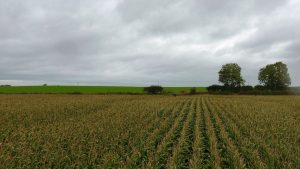
This crop of Trooper grown in the North East of England, is about two weeks away from harvest and the yield potential looks stunning. The grower needs an early harvest of high dry matter and high starch silage for a beef fattening unit and he needs it consistently year on year. This will be the third year that Trooper has fulfilled the brief and its potential. It’s great on farm – reliable, with decent yields and it is a highly digestible feed crop.
.