




Harvesting maize at the correct maturity is crucial for ensuring optimal yield, quality, and nutritional value.
Harvesting too early can lead to underdeveloped grain, lower starch and excess effluent, whilst waiting too long may result in losses of feed value, digestibility and palatability. With the very challenging conditions this year, assessing crop maturity is crucial for optimising quality. Below are some important points to consider:
Understand the Importance of Maturity
Maize maturity directly impacts its starch content, moisture levels, and overall quality. For silage, harvesting at the right stage ensures the best fermentation and feed value. For grain maize, the crop needs to reach a moisture content of 25-35% (DM of 65-75%), before being combined. The crop must be left longer in the field to dry down, to ensure maximum yield and storability.
Key Indicators of Maize Maturity
- – Kernel Milk Line
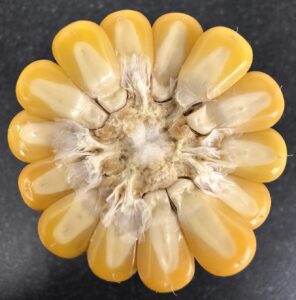
The milk line is a visual indicator of kernel maturity. It appears as a dividing line between the starchy and milky parts of the kernel. As the maize matures, this line moves from the top of the kernel toward the base. Harvest for silage is ideal when the milk line is about two-thirds to three-quarters down the kernel for silage. For grain maize, wait until the milk line disappears entirely, indicating full maturity.
- – Black Layer Formation
The black layer is a small, dark spot that forms at the base of the kernel when it reaches physiological maturity. This is a sign that the maize has stopped accumulating dry matter. For grain maize, this is the ideal time to harvest, as the moisture content will have dropped to around 25-35%.
- – Cob and Husk Appearance
Cob Colour: Mature cobs often turn from green to a reddish or brownish hue.
Husk Texture: The husks will feel dry and papery when the maize is ready for harvest.
Kernel Hardness: Mature kernels are firm and dented, with no milky liquid when pressed.
Field Observations
Uniformity: Check multiple plants across the field to ensure uniform maturity. Variability in planting dates or soil conditions can lead to uneven ripening, especially in a year such as this
Plant Health: Look for signs of disease or pest damage, as these can affect the timing of harvest. Early harvesting may be necessary in cases of severe infestation.
Timing Tips
Weather Considerations: Wet or cold growing seasons, like the one experienced in 2024, can delay maturity. Be patient and monitor the crop closely.
Harvest Window: For silage, aim to harvest within a narrow window to maintain quality. For grain maize, allow time for natural drying in the field, but avoid leaving it too long to prevent losses from lodging or pests.
Tools to Assist
LG Maize Manager App. This app is free to download and walks you through step by step to gauge plant maturity in the field. Download the LG Maize Manager App here
Visual Guides: Use charts or photos of maize at different stages of maturity to compare with your crop.
Expert Advice: Consult your local Nickerson Seed Specialist who can provide tailored advice based on your region and crop conditions.
By combining visual cues, moisture measurements, and field observations, you can make informed decisions to maximize your yield and quality.
Bath & West Dairy Day, SomersetThe Nickerson team once again attended the Bath & West Dairy Show, based near Shepton Mallet, Somerset.
This year, we were based in the Showering Pavilion, opposite the cattle arena. It is always great to see the hard work and commitment so many put into their stock, really pay off. I have been attending this event since I was young and although the site and stands remain similar, what attendees show and sell has definitely changed!
That goes for seed too; varieties, regardless of species, have moved on so much in the past decade. With the sheer number of different varieties and mixtures on the market, coupled with the Single Farm Incentive (SFI) and other environmental schemes, it can be difficult to know what to do.
This is where we, as Seed Specialists, can help you to make it all a bit clearer!
There is often a theme when talking to customers on a show stand. The recurring theme on stand at this year’s show was variability. Whether that be levels of forage in stock for the winter, or progress through maize harvest, it all comes down to who caught the rain and who sadly did not. I can say from my own experience, that west of Cardiff and South Wales has been lucky, as has Devon and Cornwall. Whereas, central and Southern areas have had to contend with a serious forage shortfall.
There is little that can be done about that now of course, although there is still time to put in catch crop mixtures to maximise home grown forage for the winter and into the spring.
Options at this point in the season could include short and long-term leys, wholecrop options or forage rye, which is often overlooked, but can be grazed in situ or zero grazed.
Another takeaway from this season, particularly in drought hit areas, is that the smallest differences can have the biggest effects. Soil type for example, has affected how well crops have done this year more than most, even soil type differences within the same field have been quite easy to spot.
As our weather is getting more and more extreme, rotation planning, cultivation methods, drilling dates and many more factors, are all things which can have a significant difference on the outcome and success of your crops.
Contact your Nickerson Seed Specialist for the best advice for your specific farm needs.
Following LG Rebellion from sowing to harvest, in the south-west
LG Rebellion; an early high yielding, hard wheat for the south-west
In recent years, south-west England has seen increasing interest in hard feed wheats, that offer both yield and adaptability. One variety making waves is LG Rebellion; a Group 4 hard feed wheat from Limagrain, which brings together several traits, especially suited to the climate and soils of this region.
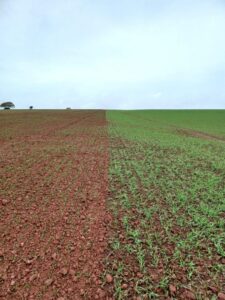
Taken mid-November 2024, LG Rebellion on the right, versus a competitor variety
LG Rebellion builds on the agronomic pedigree of KWS Extase but improves in key areas. It’s early to mature, which is a big plus in the south-west, where weather windows for harvest can be tight. Early maturity gives growers more flexibility for arranging subsequent cropping or mitigating risk of late season weather damage. With this in mind, late drilling is also a viable option with LG Rebellion.
Yield potential is another strong point. Trials indicate LG Rebellion delivers very strong untreated yields, comparable or even exceeding many other hard varieties. It’s disease resistance profile is robust; good resistance to yellow rust and Septoria, and it carries Pch1 eyespot resistance – a valuable trait where eyespot can be a threat under damp conditions.
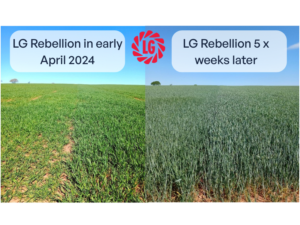
Sown in October 2023, LG Rebellion established well by early April and by mid-May, it had romped away!
In the souh-west, soils range from heavier clay loams to lighter sandy soils, often with significant rainfall, especially during autumn and winter. Crops here endure a combination of wet conditions, risk of disease pressure, and sometimes slower seedbed drying.
A wheat variety that matures earlier, with strong disease resistance, helps reduce these risks. LG Rebellion’s stiffness of straw and earlier harvest window are valuable assets.
On balance, LG Rebellion looks like a strong option for wheat growers in the south-west. Its combination of excellent yield, earlier maturity, and resistance traits, make it well suited to the climatic and disease pressures of the area.
For farmers looking to spread harvest workload, reduce risk, and maintain quality, LG Rebellion seems to tick many of the right boxes.
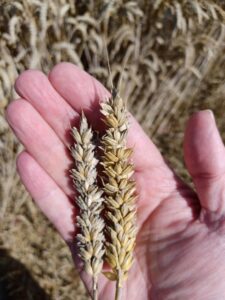
LG Rebellion yielded 1 t/ acre more than the competitor variety.
Yorkshire Seed Specialist Grant talks current favourites from the LG stable
We have a number of new wheat varieties in the LG portfolio this year.
The first to look out for is LG Shergar, a newcomer on the Recommended List for 2025. Although a Group 2 variety with breadmaking potential, LG Shergar is largely grown as a feed wheat meaning it offers a lot of marketing flexibility. It is suited to most soil types, but performs best on heavy, fertile soil and it is a short, stiffed strawed variety with good resistance to lodging.
LG Shergar is best suited for the first wheat drilling slot, but its flexibility allows it to perform well as a second wheat too, meaning it can be drilled into February. With a specific weight of 80.4, it is the highest on the Recommended List of all the Group 1s and 2s, contributing to a higher yield and looked upon favourably by end users. With high yields particularly in the North and an excellent disease resistance package, I think this variety will be a strong choice for many Yorkshire growers and am particularly excited to see what it does on farm, in areas like Holderness.
We are hosting our Rothwell demo day on 8th July, so please come along and see how LG Shergar has performed in trials as well as view our other varieties, including Nickerson’s exclusive variety LG Rebellion.
THE VALUE OF HERBAL VS PERENNIAL RYEGRASS LEYS IN DAIRY SYSTEMSThe closure of the Sustainable Farming Incentive (SFI) scheme may have taken the shine off growing herbal leys, but it does give us the opportunity to weigh up their value when it comes producing high yields of top quality forages.
The suspension of applications for the SFI in early March came as a blow for those farmers who hadn’t already applied or been accepted for the scheme.
“There’s no denying that the payments were appealing to livestock farmers, when input prices were, and continue to be, highly volatile, and weather patterns create more challenges and uncertainty in seasonal grass growing patterns,” says David Watson, North of England seed specialist for Nickerson.
“The certainty of £382 a hectare ‘in the bank’ for growing a herbal ley is attractive, and at the same time there are benefits from improved soil structure, reduced inputs and an extended grazing season in many cases.”
While the value of the herbal ley to soil health, and its reduced reliance on fertilisers are among the benefits of growing the crop, it doesn’t compete in yield or feed value with a quality perennial ryegrass sward.
“The herbal ley can provide good grazing for young stock and dry cows in fields away from the dairy platform, and some will use it for cutting and making into silage, he adds.
“Given the difference in yield and feed value, it would be very difficult to get the energy out of a standard herbal ley to support cows yielding 8,000 plus litres of milk.
“Their suitability for high production and housed herds, or those running an intensive grazing management system, should be weighed up and compared to alternative grass seed mixtures.”
Energy price tag
He illustrates the importance of forage energy production – a crucial part of improving milk or meat from home grown forage – by comparing the productivity of new and old perennial ryegrass swards.
A new ryegrass sward in its first and second year should yield 13.5 tonnes of dry matter per hectare at 12.0 ME, producing 162,000 megajoules of energy.
The ME of a 10-year-old sward, with a much lower per cent of perennial ryegrass, is likely to produce only 7 tonnes of dry matter a hectare and 10.8ME, yielding 76,000 MJ of energy.
“The difference is 86,000 MJ. This shortfall in energy is equivalent to the energy from 7.3 tonnes of wheat. Taking a price of £200 a tonne, this would add £1460 a hectare to costs to gain the same energy in feed.”
“We need to consider the difference in production between swards of different qualities and potential.”
In the case of a herbal ley in the SFI scheme, the lower productivity should be offset against the £382 a hectare payment.
“We should also consider the shorter sward longevity of a herbal ley and the decline in species diversity when we consider costs verses benefits,” he adds.
Those who have not gone down the SFI route, or have missed out, can reap rewards. “Evaluating their grassland and estimating perennial ryegrass content – which should be above 70%, and making improvements to those swards needing some TLC will improve forage productivity on the farm.
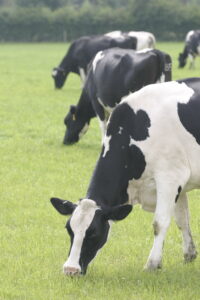
“Trials continue to show that new leys will yield up to five tonnes of dry matter per hectare more in their first year than a four-year-old ley. This means reseeding typically pays for itself in yield value within the first two years.
A reseed also offers the opportunity to introduce clover. A typical grass ley with 30% white clover can fix 180kgN per hectare. Based on a urea cost of £748 per tonne, this is worth around £305 per hectare.
Clover-rich swards can remove the need for nitrogen applications throughout the ley’s lifespan, and there may even be residual nitrogen left for the following crop. And if a full reseed isn’t a suitable option, pelleted clover is a great way to overseed into an existing ley.
“A more intensive approach to grassland management could be more cost-effective. And maximising home-grown forage production has cost and environmental benefits over bought in feed products.”
Pick a mix
Choice of seed mixture will affect both yield and feed value, and when it comes to selecting perennial ryegrass mixtures, farmers can ‘cash in’ on well-designed, tried-and-tested mixtures shown to out-perform standard mixtures.
“It’s worth paying that small premium,” adds David. “The cost of preparing land and sowing the crop is the same, and the seed cost is only a small proportion of the total process, so the extra cost here will pay for itself in better yield and quality.”

“There’s a lot of knowledge and research that’s used in formulating grass seed mixtures, using recommended varieties that perform well in their own right and compliment other varieties in the mixture.
Extensive Limagrain field trials have shown that new, top-yielding varieties, will outyield mixtures with older varieties, even at lower nitrogen rates. So even if it is necessary to cut back on application rates, a new ley, with the latest varieties will yield better than older mixtures or varieties. Nickerson Circle Leys – with the Red, Gold and Green Circle mixtures ideal for dairy; the choice depending on the required duration of the ley.
“These field trial results also demonstrate a mixture’s suitability to different conditions and uses – cutting, grazing and dual purpose. We can use this information to advise the best choices for the system and the farm,” he says.
And although payments have also ceased for including legumes – typically clover in grass leys, there are still advantages of including it in the sward, either in the grass seed mixture or oversown once the grass is established.
“Clover will add feed value and promote intakes and fix nitrogen in the soil – it brings many benefits.”
The knowledge and choice of species and advancements in varieties available in perennial grass seed mixtures is limited in herbal seed mixtures.
“Although some companies now offer more specialist herbal seed mixtures, many just ‘tick the boxes’ with the required number of herbs in the mix and less productive grasses that don’t compete against the herbs and legumes within that mix. And there’s often limited knowledge on their performance and feed value,” says David
While herbal leys can be attractive – particularly if payments are available, the pros and cons need weighing up to make sure the right decisions are being made. And for those not involved in the SFI scheme, all is not lost. There are worthwhile rewards to be had in selecting high quality mixtures and in reseeding or oversowing with perennial ryegrass mixtures as part of the grassland rotation.
Simon Custance drills down on growing grain maize!When growing maize for grain, it is important to understand all the characteristics and possible limitations of your soil. Weather patterns and varietal choice are also key to ensuring you have a crop that is going to reach its full potential at harvest.
As a grower you consider the best site, the correct establishment method and the most appropriate varieties for your conditions. The portfolio of Limagrain varieties have been bred to be adaptable. As Nickerson seed specialists, we are well versed in the characteristics and growth habits of individual varieties within the Limagrain stable, making us best placed to advise on suitability.
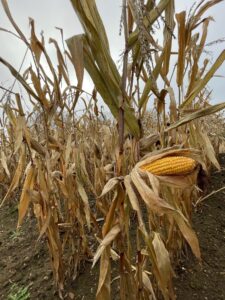 Varieties for grain maize recommended by Nickerson include LG30.179, Ambition, Promise, Prospect and our new variety LG31.160. These are all rated highly in terms of standing, disease resistance and all-important yield.
The newest grain maize variety I have to offer on farm is LG31.160. With good yields of 9.2 t/ha @ 15% moisture and reduced harvest moisture content of 24.6 % means drying costs can be lower, compared to previous varieties that are harvested wetter.
Harvesting later than forage maize, due to the time required for the grain to dry down as much as possible, can lead to combining maize in worse conditions. Having a cob that dries down rapidly without losing yield or quality is crucial. This is where LG31.160 excels with its rapid dry down characteristic.
Selecting the right site is crucial. Maize is a crop that favours sheltered locations with a south-facing aspect which will allow for earlier drilling and will maintain soil temperatures for longer in early spring. With maize being a crop so reliant on heat units, it is imperative to give the crop the best chance, given the UK’s unpredictable weather patterns.
Sheltered fields offer higher retention of heat units in the canopy as well as reduced chance of lodging. The recommended maximum altitude for maize is 1,000 feet (300m) above sea level.
Maize favours sandy/
sandy loam soils, a well aerated soil structure and no compaction. Clay soils hold water and can be slow to warm up. However, maize can be grown on soils with a clay content of up to 25% if earlier drilling is achieved.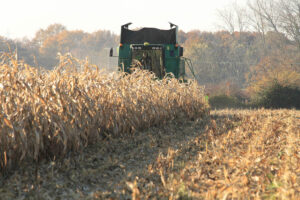
Chalk is unsuitable due to slow warm up in the spring and can reflect sunlight. However, chalk downland soils can support maize if soil depth is sufficient. Poorly aerated soils will limit root formation and can cause premature crop senescence.
Grain Maize should be drilled at a lower seed rate, around 35,000 to 37,500 seeds per acre, compared to forage maize which should be grown at around 42,000 seeds per acre. This gives more space per plant, allowing cobs to increase in size due to increased sunlight penetration into the lower canopy of each plant.
Dairy Tech 2025 – Thank You!
A huge thank you to all the farmers who visited our stand! It was fantastic to see you in a different environment than your farms and to hear from so many of you across the country about how well your Red Circle leys have been performing. We also enjoyed answering your questions about maize, whole crop silage, and lucerne.
With so much on offer from the industry, we hope you took away some valuable ideas from the event. It was also great to hear a sense of optimism, especially after the challenges agriculture has faced in recent years.
For those who couldn’t make it—Dairy Tech was bigger than ever this year!—we hope to see you at upcoming events like Farm Expo Southeast. We’re also hosting some breakfast meetings, so keep an eye out for details.
If you’re unable to leave the farm, remember we’re always just a phone call away. Looking forward to catching up soon!
David Watson reflects on his Alternative Forage EventOn 29th January, myself along with colleagues from the Northern Team, hosted an Alternative Forages Conference in and around Stocksfield and Ebchester, South Northumberland.
The event brought together industry experts, farmers, and stakeholders to discuss the benefits of home-grown forages in reducing costs, improving farm profitability, and minimising the environmental impact of livestock feeds, especially those that have been imported.
The day featured a number of insightful presentations from experts across the Industry:
- Lily Spencer Brown of Myton Foods emphasised the significance of home-grown forages for their operations, and the benefits they provide to producers. She also outlined Myton Foods’ producer schemes, specifically their beef production partnerships with multiple retailers, including Morrisons.
- Michael Carpenter, Technical Director of Kelvin Cave shared his extensive knowledge on conserving maize and grass silages. He also explored the inclusion of crimped and whole-cropped legumes in livestock diets and his involvement in the NCS research project, which investigates legumes as a source of home-grown protein.
- Tim Richmond, Maize Product Manager for LG Seeds highlighted the potential of Ultra Early maize varieties in the North, explaining how these varieties have revolutionized maize cultivation, by eliminating the need for plastic film.
- John Spence, Forage Crops Product Manager for LG Seeds outlined the importance of grass in the diet and the need to ensure that swards were regularly re-seeded to prevent a deterioration in both quality and yield.

Following the discussions, we then visited Broadoak Farm, where hosts Wayne and Geoff Bean demonstrated how they have successfully implemented the principles discussed during the conference.
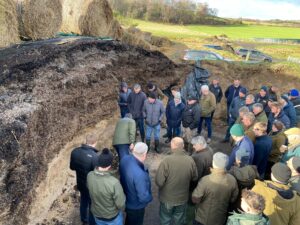
Myself and the Nickerson Northern team would like to thank all the guest speakers, and Geoff and Wayne Bean for their invaluable help with this event, and to Kelvin Cave Ltd for additional sponsorship.
We hope to see you at our next event!
More Information?
If you would like to know more about how these forages could help you on your farm please contact me on 07811 746804, david.watson@nickerson.co.uk
Over the last 20 years, maize breeding has come a long way.
It would be perfectly normal for Farms to be cutting Maize in November in the south and Midlands back in 2000. Maize wouldn’t even be considered in a dairy ration north of the Humber in Yorkshire or Lancashire back in the early 2000s. But now most Farms in the South and Midlands can harvest early varieties by the first and second week in September, and farms in the North can finally harvest varieties in mid October without plastic.
With this revolution in dairy rations bringing affordable homegrown protein, how can harvesting earlier in the season be more cost-effective for your farm business?
With the government’s new SFI scheme replacing the Basic Payment, farmers are having to change their cropping systems again—not due to revolutionary breeding, but to maintain much needed income for their businesses. This is where the last 30 years of maize breeding and research could come into play.
Schemes such as SAM2, which promotes multi-species winter cover crops, are being introduced to ensure farmers don’t have fallow fields over the winter period. Though the payment is not substantial, it still provides support to the business.
With an earlier variety, the benefits extend beyond just yield; it’s easier on the soil, reducing compaction and water run-off. This keeps any risk of environmental damage to minimum, saving farms from any potential visits from the environment agency.
Many farmers have found it easier to coordinate with their contractors, as harvesting earlier means that contractors do not have to rush between farms leading to a better service and a better clamp compacted and covered. Farmers are also finding that, with having earlier varieties available to them, they have a longer window for the maize in the clamp to ferment with anaerobic respiration, leading to a higher quality product for their cows when the grass quality drops.
With a longer period before the soil temperature drops, the cover crops have a better chance for establishing. If farmers choose to grow a grass mix, including Westworlds and Italian ryegrass post-maize harvest. In a full farm rotation, an early maize harvest could be incredibly beneficial for getting in a cereals crop, such as barley or triticale.
Holding soil structure together better means fewer nutrients run-off the fields. saving fertiliser expenditure for the next crop.
In conclusion, adapting to the advancements in maize breeding and embracing earlier harvesting practices is not just a matter of timing; it’s about securing the financial future of our farms. By making these strategic changes, we can optimise our operations and enhance the sustainability of our agricultural practices.
More Information?
If you would like to know more about how embracing earlier harvesting practises could help you on your farm please contact me on 07977523201, or sam.johnson@nickerson.co.uk
I’m Simon Custance. I come from a family farm in north west Cambridgeshire where we grow winter and spring cereals, winter beans and sugar beet.
I’ve always enjoyed farming from helping my dad walk fields as a child, to grading potatoes and learning to drive a tractor in my teens.
I studied Agriculture with Crop Science at Hartpury where I learned much more about maize, grass and added to my existing knowledge of combinables and roots.
The course was wide-ranging including working on the university farm doing many roles. Milking cows, lambing and young stock management were all enjoyable parts that I learnt and was happy to gain experience in.
After finishing university in May 2020, I started with Agrii as a Agronomist. I really enjoyed the problem-solving aspect of identifying pests, weeds and diseases and coming up with both cultural and chemical solutions.
After almost 2 years with Agrii, I decided to leave in spring 2022, the world was opening post-Covid and I travelled to Canada to work on an arable farm and experience different farming methods. South Saskatchewan is on the same latitude as the midlands; however, the farming practices are incredibly different! Rainfall is about 30% of central England. The challenges for the farm there revolved around the large temperature fluctuation of -40 to +40 degrees Celsius, low rainfall and poorer soils.
On my return to England, I worked for a local New Holland dealer in Cambridgeshire demonstrating, selling and supporting products from combines to potato planters. I was given an established area and helped, through a difficult time for agriculture, to build a customer base and expand the business.
I have always thought seed is the most important part of growing. Varietal choice for the unique conditions each farm and field present is critical. That’s when I applied for the job with Nickerson, I am very much looking forward to learning and expanding the business.
Nickerson is a well-established and highly thought of company, I am very privileged to work for them as a Seed Specialist, learning and working in an industry which is always full of ideas and forward thinking.
Douglas Bonn on his preparations for the 2025 Borders Demo DayFor the fifth season the Todd family are kindly hosting our wheat demonstration in the borders. This year we have 19 different varieties from ones growers are using at the moment, ones which are being looked at to grow in the future and new varieties within the AHDB candidate list. After the success of last year’s demonstration we have repeated the different establishment methods. All the varieties have been sown into both cultivated ground and directly into a standing cover crop with LG Redwald and LG Typhoon at different seed rates, 100% and 50% of the standard rate.
Updates will be posted throughout the season and we will again host an open day, with our partners Hutchinsons, in June.
Grant Connor gets lost in LG31.207 – growing a maize maze in East Yorkshire
When asked what maize is grown for; livestock feed, AD or possibly even game cover would all be acceptable answers. A more unusual and downright creative use for this tall, dense and versatile crop that you probably haven’t considered is a maze.
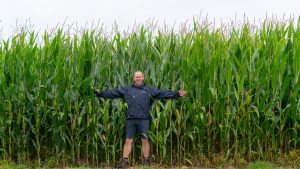
Jonathan Payne – Northern Sales Manager in a typically tall crop of LG31.207
This is what one of my customers has been growing his maize crop for, his maize maze is a very inventive diversification for the farm near Hornsea in East Yorkshire. The farm gates will be opened to the public for the month of October with other seasonally appropriate offerings such as pick your own pumpkins, strawberries and sunflowers. Jason Butler used Nickerson exclusive variety LG31.207 to establish his maize maze, the variety was chosen due to its high rating of 8 for standing and most importantly its notable height, both essential characteristics for a maze! The variety also has an FAO of 210, this later maturity was another key consideration when it came to variety choice. The maze doesn’t open until early October, so Jason was looking for something which would stay green throughout the time it is open to the public.
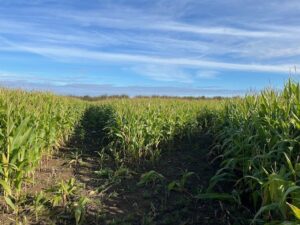
Establishing the maize maze near Hornsea
LG31.207 is a great variety for more traditional end uses as well. Opting for a later maturing variety suits farming systems on lighter soils which are supplying maize to an AD plant where quantity and staggered supply are required, LG31.207 fits this requirement nicely. With an early vigour score of 8.2, it emerges better and has the edge over other varieties of the same FAO group with lower early vigour scores.
Jason’s crop was drilled on 16th May, the crop has required very few inputs other than a pre-emergence herbicide – and it is looking great. The pathway for the maze was mapped early on so that it was easier to chop into, but also so that Jason doesn’t get lost in his own maze!
The maze opens 5th October so if you are in the area please call in to support what is an excellent diversification project and see how versatile our maize is.